

From the Trail: The Secret Life of Snow
How Snow Pack Protects Plants and Animals in the North Cascades
When most people think of snow, they imagine blanketed forests, towering mountain peaks, snowball fights, or cozy winter days by the fire. But snow does more than create beautiful winter scenery. In the North Cascades, snow plays an important role in protecting plants and animals from harsh winter conditions. Snowpack helps living things survive the cold months and supports the ecosystem long after winter is over.
What is Snow Pack?
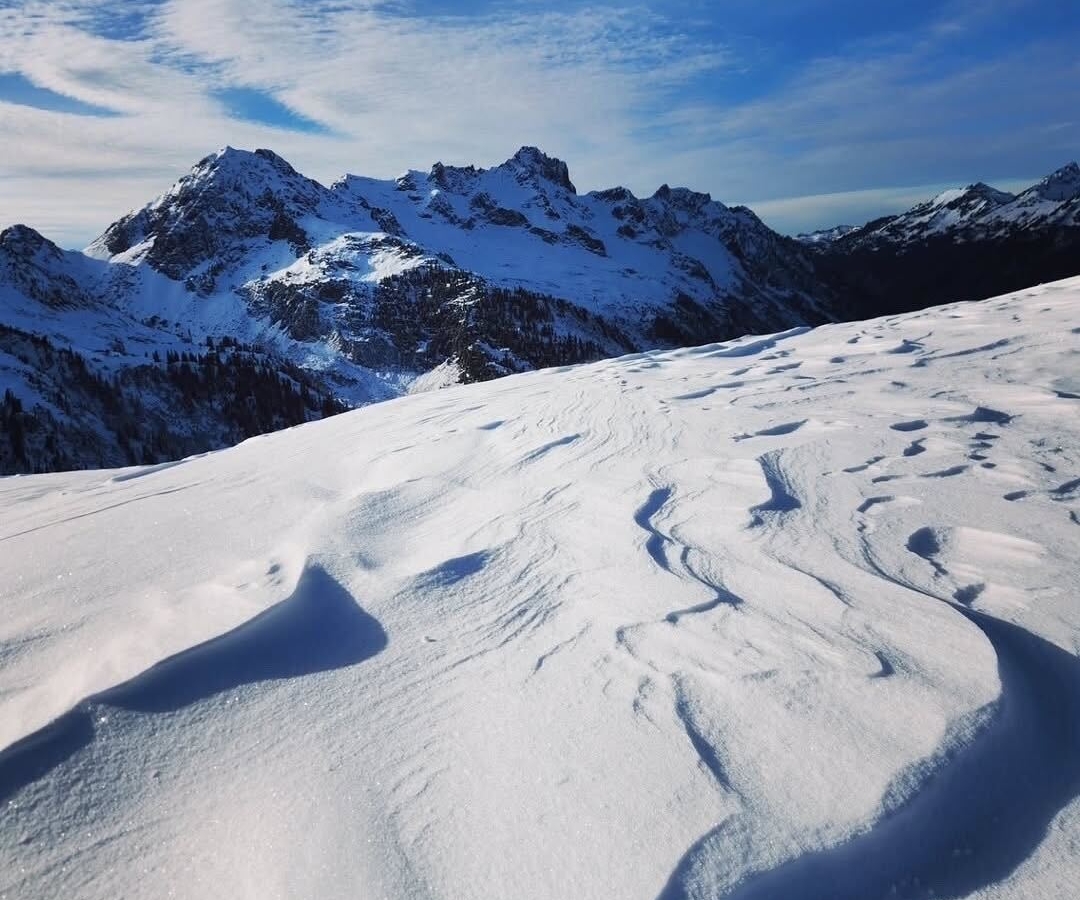
Snowpack refers to the layer of snow that builds up over the winter months. Some areas of the North Cascades can get up to 600 inches or 50 feet of snow each year. The snow doesn’t just sit on the ground, it actually becomes an important part of the ecosystem, especially as it melts in the spring. During the winter months, snow has a very special job, it works as an insulating blanket playing a major role in keeping the environment alive and thriving during the colder months.

Snow: Nature’s Insulation Blanket
Snow acts like a warm blanket for the plants and animals in the North Cascades. When snow falls, it creates layers that trap air in between the snowflakes. This trapped air acts as insulation, just like how a winter jacket keeps you warm by trapping heat close to your body. This insulating effect means the snow on the ground maintains a constant temperature beneath it, often staying just a few degrees above freezing, even when the outside air is much colder.
For plants, this is a game changer. Some plants in the North Cascades, like wildflowers and shrubs, depend on snowpack to survive the winter. Without snow acting as insulation, the ground could get so cold that the roots would freeze, killing the plant. Thanks to snow, these plants can stay alive under the white blanket, ready to bloom when the weather warms up.
Snow’s Role for Animals in the North Cascades
Snow isn’t just for plants, animals in the North Cascades also rely on snow to stay warm and safe. Snow helps many animals adapt to tough winter conditions. Here are some North Cascade animals that are snow adapted.
Snowshoe Hares are masters of camouflage. They are covered in thick, white fur during the winter months, which helps them blend perfectly into the snowy landscape. This white coat makes it harder for predators, like lynx and coyotes, to spot them. Snow isn’t just for camouflage, it also helps animals move around. Snowshoe hares have large, wide feet that help them glide over deep snow without sinking, much like how a snowshoe helps a person walk on soft snow.
Wolverines use snow to keep their food hidden and for shelter. Like snowshoe hares, wolverines have wide fur covered paws that act like natural snowshoes. This allows them to travel efficiently across deep snow while hunting or scavenging. Wolverines rely on their excellent sense of smell to locate food they have stored beneath the snow to keep it safe from other predators. Wolverines rely on snowpack for shelter when they give birth to their kits. They will den feet below the snow to keep their kits safe until they are old enough to venture out.
Wolverines aren’t the only animals who use snow for shelter. Moles, voles, and other small mammals dig tunnels under the snow, where the temperature stays relatively warm. These snow tunnels, called “subnivean” tunnels (meaning “under the snow”), act like underground highways for these animals. The tunnels provide a safe haven from predators and a cozy place to nest, hunt, and rest.

How Snow Supports the Ecosystem Year-Round
While snow’s main job is protecting life during the winter, its role extends well into the warmer months. Snowpack is a vital source of water for the North Cascades ecosystem. While it keeps plants and animals safe in the winter, it also stores water for later. As the snow melts in the spring, it slowly releases moisture into the soil, rivers, and lakes. This gradual release is essential for keeping the environment healthy through the dry summer months.
Snow: A Lifesaver for the North Cascades Ecosystem
Snow is much more than a winter decoration. Snowpack plays a critical role in the survival of the plants and animals that call this mountainous region home. The snowpack of the North Cascades plays a crucial role in keeping the ecosystem healthy and balanced. By acting like an insulating blanket it protects plant roots, provides shelter for animals big and small and helps ecosystems stay alive and thriving through the harshest months of the year. It’s one of nature’s many gifts and one that makes the winter months in the North Cascades a little warmer and a lot more magical.
Top photo by Hwei Ling
 Marissa Bluestein is a naturalist, writer, former ranger and environmental educator with a deep affection for Pacific Northwest landscapes. She has spent many seasons sharing her love for public lands and environmental education with visitors from around the world in roles with the National Park Service – including North Cascades, Olympic, Sequoia and Kings Canyon National Parks. Marissa enjoys sharing naturalist-inspired stories and answers to everyday outdoor recreation and exploration questions. Leave your in the comments below!⠀⠀⠀⠀⠀⠀⠀⠀