

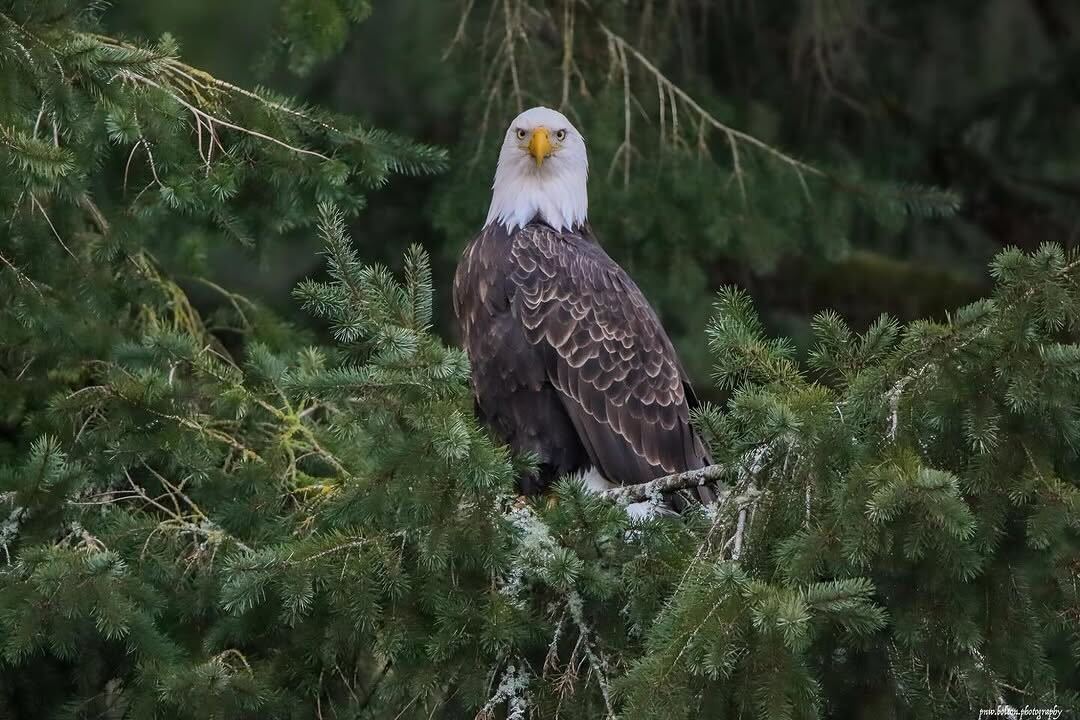
From the Trail: Bald Eagle Winter Migration
The bald eagle is a bird of prey found near large bodies of open water with an abundant food supply and old growth trees for nesting. Their winter migration to the North Cascades provides an opportunity to observe and photograph them in groups, feeding along riverbeds or roosting in trees in numbers that only occur from December to February, when they come from as far as Alaska to feast on carcasses of salmon that have spawned, then die along the upper Skagit River.
If you’ve ever wanted to see a bald eagle up close and personal, there’s no better place than the Skagit Eagle Festival in Rockport, Wa shington. This month-long annual event brings together eagle enthusiasts, nature lovers, and families for a fun, educational, and eagle-tastic celebration of these majestic birds. Whether you’re an experienced birder or just someone looking to enjoy the beauty of the North Cascades ecosystem, the Skagit Eagle Festival offers a unique opportunity to witness bald eagles in their natural habitat.
When and Where to See Bald Eagles
The Skagit Eagle Festival typically takes place every year from January to mid-February, which is the best time to see bald eagles in the region. During this time, thousands of bald eagles migrate to the North Cascades to feast on the abundant salmon that swim up the Skagit River to spawn.
Bald eagles are often seen perched on trees, gliding over the river, or diving to catch fish. The Skagit River and its surrounding areas, including Rockport State Park and Howard Miller Steelhead Park, are some of the prime spots to witness these birds in action. Every weekend at Howard Miller Steelhead Park, visitors can take part in 90 minute guided nature hikes focusing on eagles, salmon, and their interconnected relationships within the Skagit River watershed.
 Tips for the Best Bald Eagle Viewing Experience
Timing is Key
The best time to see bald eagles is in the morning, especially around 9 AM to 11 AM. During this time, eagles are more likely to be active, hunting for fish and flying low over the river. The winter months bring cold mornings, so dressing warmly is a must. Wear layers, bring gloves and a hat to keep you warm while waiting for the eagles to show up.
Head to the Riverbanks
The Skagit River is the place to be for eagle sightings. Bald eagles tend to gather along the river in search of salmon, especially near areas with slow-moving water. Make sure to give space and stay away from the river’s edge and gravel bars where eagles are feeding, especially in the morning. Keep your noise low and movements slow. Some of the best eagle-viewing spots are Howard Miller Steelhead Park, Rockport State Park, and various river access points along Highway 20.
Bring Binoculars and a Camera
While bald eagles are often visible from a distance, bringing binoculars or a spotting scope can help you get a closer look. A good telephoto lens for your camera will allow you to capture these special birds in flight or perched high in the trees.
Respect the Eagles’ Space
While it’s exciting to see bald eagles up close, always keep a respectful distance. Don’t approach them too closely, especially if they are feeding or perched in trees. Bald eagles are wild animals, and it’s important to respect their natural behaviors and habitat.
Be respectful of the local community
It’s easy to get caught up in seeing eagles and all around you but, make sure you are also recreating respectively and responsibly. Don’t drive and bird, pull over whenever possible, stay in your car and use it as a blind from which to photograph eagles. Make sure you use public areas along rivers and be courteous to local land owners. Do not walk across private property. ⠀⠀⠀

Eagles and the North Cascades in winter
The North Cascades is visited primarily during the summer months, when highway 20 is open, snow has melted in high elevations and trails have been cleared, but there are plenty of things to do in the winter as well. The Skagit Eagle Festival is not only an opportunity to witness one of nature’s most iconic creatures in the wild, but it’s also a great way to experience the beauty of the North Cascades during the winter months. Surrounded by snowy peaks, serene rivers, and dense forests, it’s a place of natural wonder that’s perfect for anyone who enjoys being out in nature. Whether you’re marveling at an eagle’s wingspan as it soars overhead, learning about eagle conservation, or simply enjoying the winter beauty of the landscape, the North Cascades never disappoint. So grab your binoculars, bundle up, and head out on an adventure.
Eagle photos by Nate Bolton
 Marissa Bluestein is a naturalist, writer, former ranger and environmental educator with a deep affection for Pacific Northwest landscapes. She has spent many seasons sharing her love for public lands and environmental education with visitors from around the world in roles with the National Park Service – including North Cascades, Olympic, Sequoia and Kings Canyon National Parks. Marissa enjoys sharing naturalist-inspired stories and answers to everyday outdoor recreation and exploration questions. Leave your in the comments below!
Thanks for this article. It’s a good refresher and provides guidance for the humans how to view the eagles respectfully and safely.