


From the Trail: Why Autumn Smells So Good in the North Cascades
Summer in Washington is winding down, the days are getting shorter, and you can feel fall starting to creep in. The temperatures cool off, the rain returns, and even the air seems to smell a little different. There’s something about autumn in the North Cascades that makes you want to stop walking, take a deep breath, and think, “Wow, the forest smells incredible.”
Maybe it’s the damp earth along a trail. Maybe it’s the scent of fallen leaves, moss, pine needles, and rain. Or maybe it’s that hard-to-describe smell that seems to appear just after a fall shower.
That distinct autumn smell has a lot to do with chemistry.
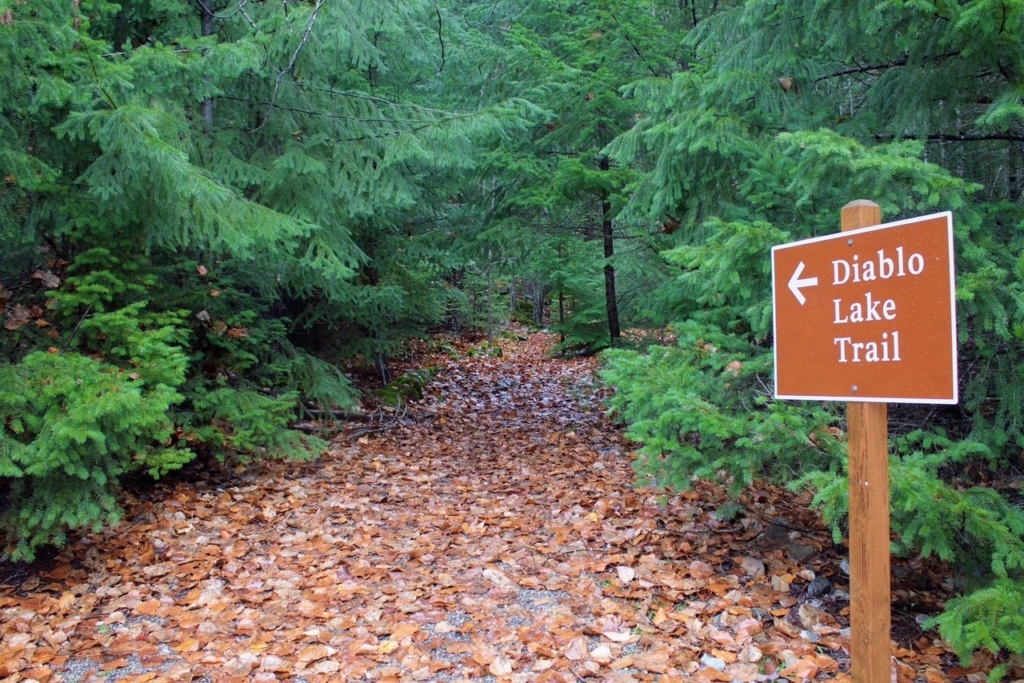
The smell of rain
One of the first smells you might notice is that familiar earthy smell after a rain. It even has a name: petrichor. The word sounds complicated, but the basic idea isn’t. During dry weather, plants release oils and soil microbes produce compounds that collect in the ground.
One especially important compound is called geosmin, which is made by microorganisms living in soil. Our noses are actually really good at picking up geosmin, even in very small amounts, which is one reason you can notice that earthy smell almost immediately after a rain.
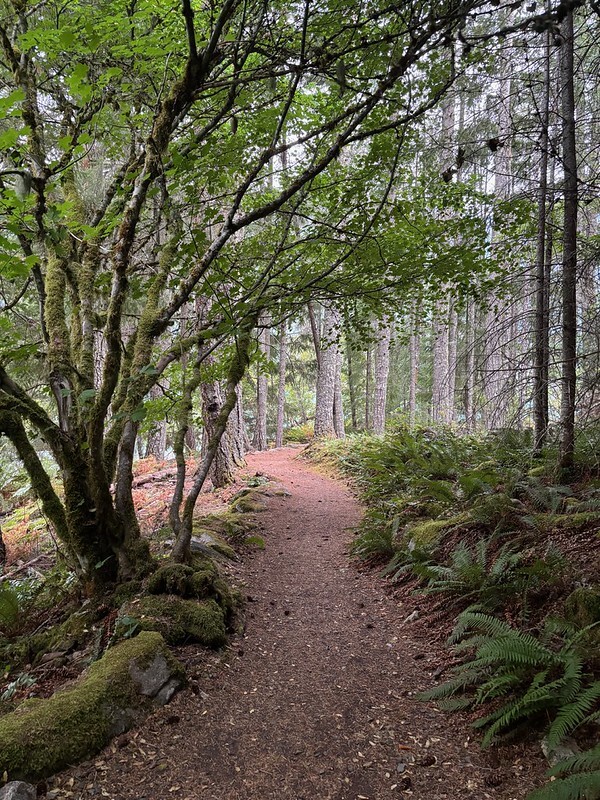
When rain finally arrives, especially after a dry stretch, raindrops hit dusty soil and disturb those compounds. Tiny droplets and particles can become airborne and drift upward. Suddenly, all those smells from the forest floor are floating around you.
Why the North Cascades smell especially good
The forests of the North Cascades have plenty of ingredients to make that autumn smell.
Think about a hike you’ve taken in the North Cascades. Maybe you’ve moseyed up Thunder Creek beneath the old-growth trees, wandered around the Environmental Learning Center, or made your way along Deer Creek Loop toward the waterfall. As you walk, you are beneath Douglas-firs, western hemlocks, cedars, and other conifers. The forest floor is covered with needles, leaves, twigs, bark, moss, and decaying plants. Add cool autumn temperatures and plenty of moisture, and you have an excellent recipe for interesting smells. Conifer needles contain aromatic oils and resins. When needles fall and break down, some of those chemicals contribute woody, fresh, or resinous aromas.
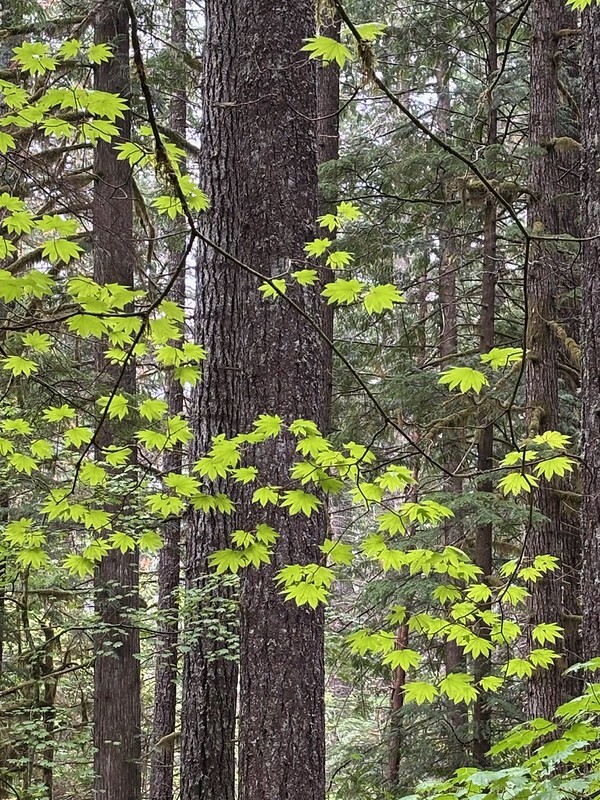
Then there’s the leaf litter, the layer of leaves, needles, twigs, and other plant material covering the forest floor. It might look like a pile of dead leaves, but there’s actually a lot going on underneath. Fungi, bacteria, and other decomposers are busy breaking all of that material down and returning nutrients to the soil. As they do their job, the chemicals inside those leaves change. Some of the compounds released during decomposition contribute to the earthy, musty smell we associate with autumn.
So when you smell that rich forest-floor scent on a North Cascades hike, you’re smelling an ecosystem at work.
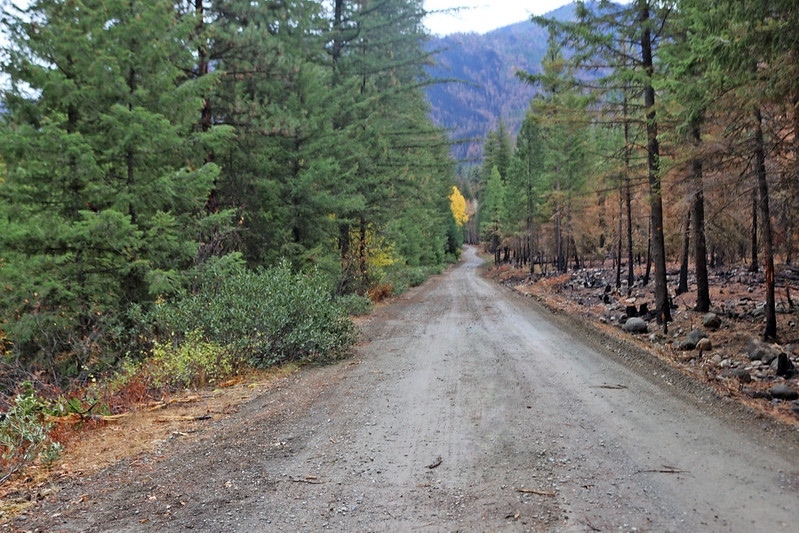
Rain + dust = forest magic
There’s another cool trick happening when rain hits dry ground. Raindrops landing on dusty or porous soil can trap tiny pockets of air. When those bubbles burst, they can fling microscopic particles and aromatic compounds into the air. Those particles can carry earthy smells straight to your nose. So that wonderful “rain smell” isn’t really the rain itself. The rain is helping release compounds from the soil and carry them into the air where we can smell them.
A forest you can smell
Scientists actually have a word for these seasonal changes: phenology. It’s the study of how plants, animals, and ecosystems respond to the changing seasons. And in the North Cascades, autumn brings plenty of changes to notice. So next time you’re hiking in the North Cascades after a fall rain, take a second to stop and smell the forest. Notice the smell of wet bark, crushed needles, damp soil, moss, and fallen leaves. There’s a lot more going on in that earthy smell than you might think. That cozy autumn scent is really a combination of biology and chemistry, microbes making geosmin, plants releasing aromatic compounds, fungi breaking down fallen leaves, and raindrops stirring everything together.
Pretty impressive for a puddle, a pile of leaves, and some dirt.
Photos by Jodi Broughton, Mariassa Bluestein and NCI