

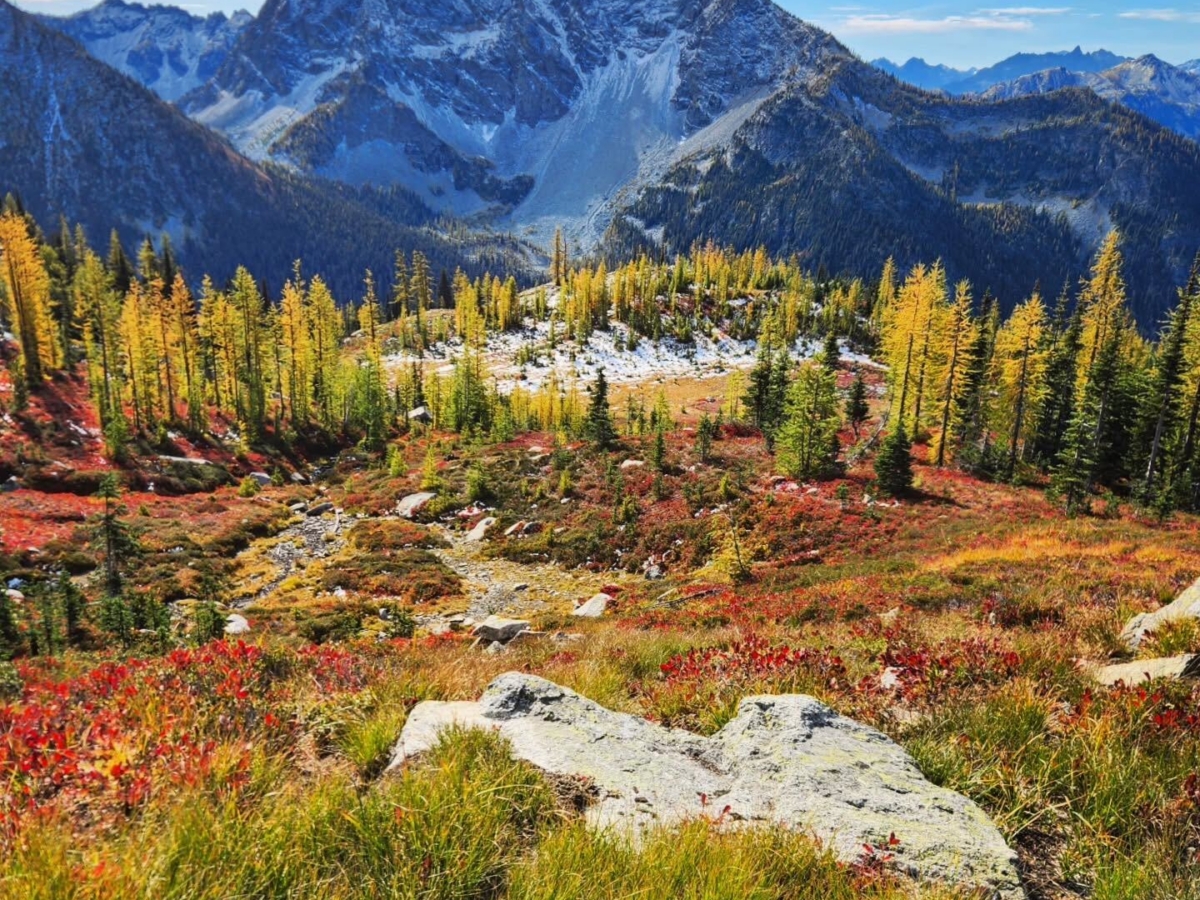
Why Do Larch Trees Turn Gold? And Why Is That So Weird for a Conifer?
There’s a moment every fall in the North Cascades when the mountains seem to light up, not with red or orange leaves, but with gold. And if you’re hiking among those glowing trees, you might notice something strange: they look like evergreens, but they’re turning yellow.
Welcome to larch season!
Larches are some of the most unusual trees in the North Cascades. They have needles. They grow cones. They look like evergreens for most of the year. But when fall arrives, they do something most of their conifer neighbors don’t do. They turn gold and drop all their needles.
So why would a conifer bother turning gold before going completely bare?
Why do larches turn gold?
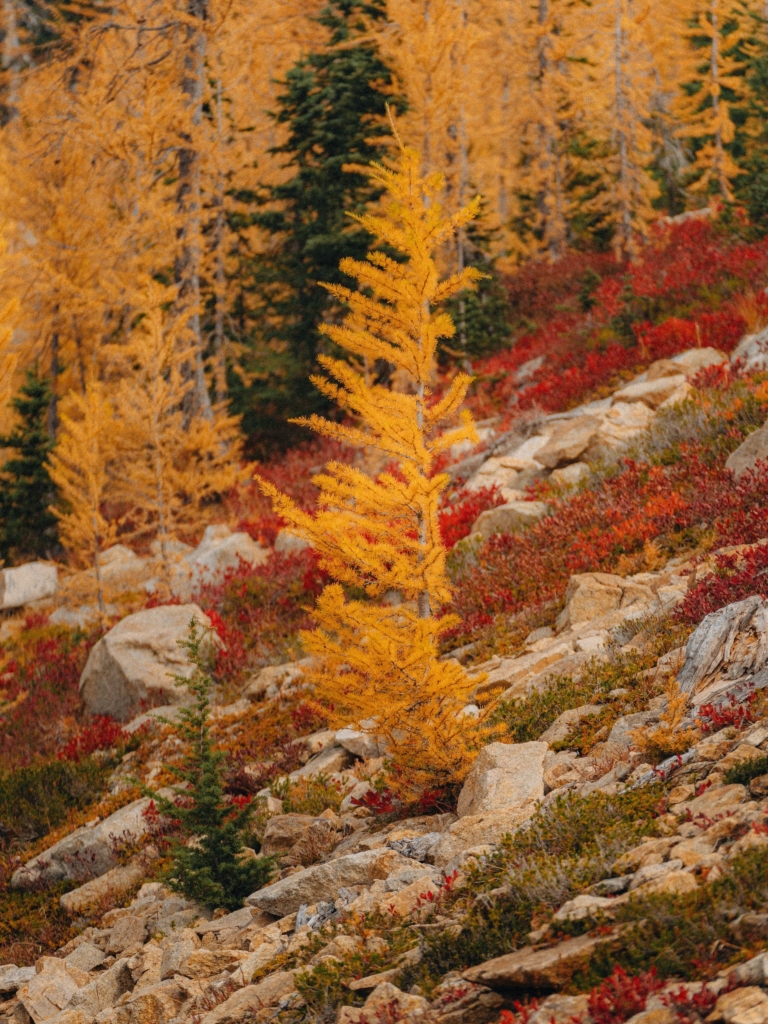
Like other trees, larches use chlorophyll to capture sunlight and make energy during the growing season. That chlorophyll is what gives their soft, feathery needles their green color throughout spring and summer. But autumn changes things.
As the days get shorter and temperatures drop, the tree starts preparing for winter. It pulls useful nutrients out of its needles and stores them in its branches and roots. As the green chlorophyll breaks down, other pigments that were already there become visible and suddenly, green becomes gold. Eventually, the tree lets go of its needles altogether.
It might seem like a strange thing for a conifer to do, but in the North Cascades, it makes sense. Winters can be cold, snowy, windy, and long, especially at higher elevations. Rather than spending energy maintaining thousands of needles when there isn’t much sunlight available, larches drop them and wait out the winter. Then spring comes around, and fresh green needles grow back.
A conifer that doesn’t act like a conifer
Most of the conifers you’re likely to see in the North Cascades stay green throughout the year. Firs, spruces, hemlocks, and pines keep their needles through winter. Larches don’t get that memo. They’re deciduous conifers, which means they’re conifers that lose their leaves, in this case needles, every year.
There’s another easy way to recognize them. Larch needles grow in little clusters along the branches, giving the tree a soft, feathery look. Once you’ve seen one up close, they’re surprisingly easy to pick out. (Highly recommend shaking the “hand” of a larch, IYKYK)
And then there’s the obvious clue in October, if a tree looks like an evergreen that has suddenly been dipped in gold paint, there’s a good chance you’re looking at a larch.
Larch March: Where and When to See Golden Larches
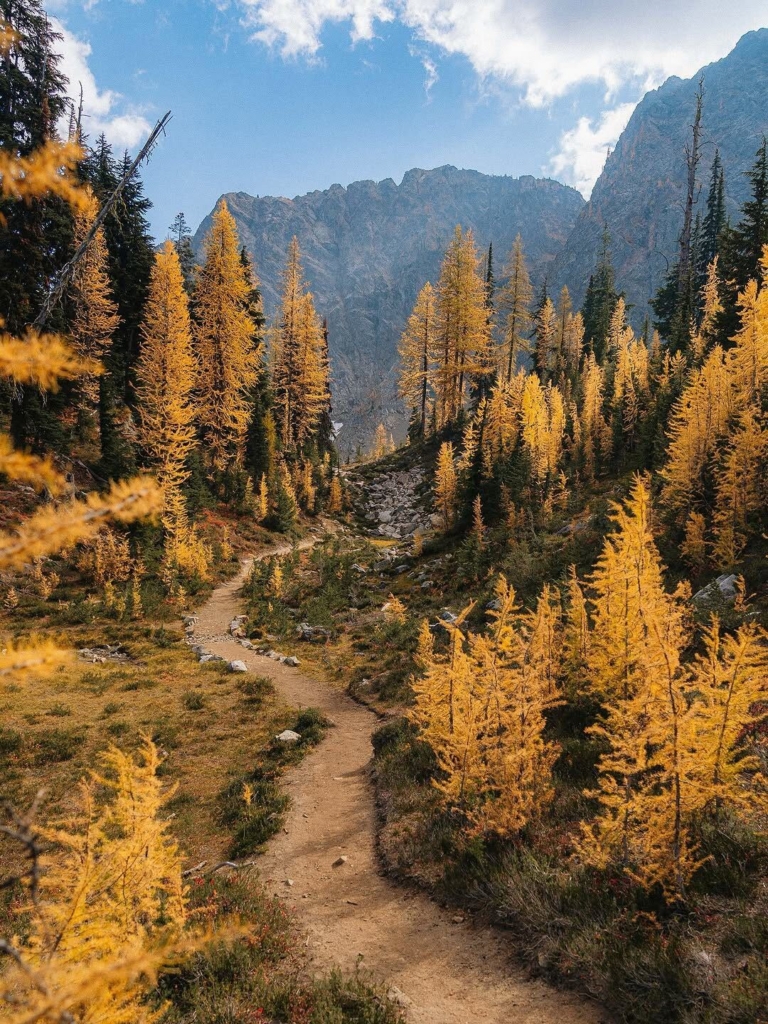
For a classic North Cascades larch experience, head into the high country in late September and October. The exact timing varies with elevation and weather, but higher-elevation larches can begin changing around late September, with the golden display often reaching its peak in early to mid-October.
Some well-known places to look for subalpine larch include Easy Pass, Fisher Basin, McAlester Pass, McAlester Lake, Purple Pass, and the Juanita Lake area.
The trick is timing. Larch season can be wonderfully brief. One week you may be walking beneath glowing golden branches; a short time later, the needles can be carpeting the trail.
And you’re definitely not the only one who wants to see them. If you decide to take a larch march, pack your patience. Popular trails can get crowded during peak color, so have an alternate hike in mind. Check road and trail conditions before you head out, and remember to practice Leave No Trace principles.
Two Larches, Two Mountain Neighborhoods
The North Cascades are home to two different larches, and knowing where they live can help you find them.
Western larch prefers the drier forests of the eastern Cascades. It can grow into an impressive tree, towering above the forest and developing a broad, open crown with age.
Subalpine larch is the high-country specialist. You’ll find it at higher elevations, often scattered across rocky slopes, mountain basins, and open areas near treeline. Its twisted, weather-beaten appearance is part of its charm, it has to endure some seriously tough mountain weather.
A few fun larch facts
- They’re conifers, but they’re deciduous. That’s probably the easiest way to describe what makes larches so unusual.
- Their needles are soft. Give one a gentle feel and you’ll notice how different they are from many other conifers.
- They grow cones. Look closely and you’ll find small cones tucked among those clusters of needles.
- Their gold color is temporary. The needles eventually fall, leaving the tree bare for winter.
- They start over every spring. Once winter is over, fresh green needles grow back on those bare branches.
Go for the gold
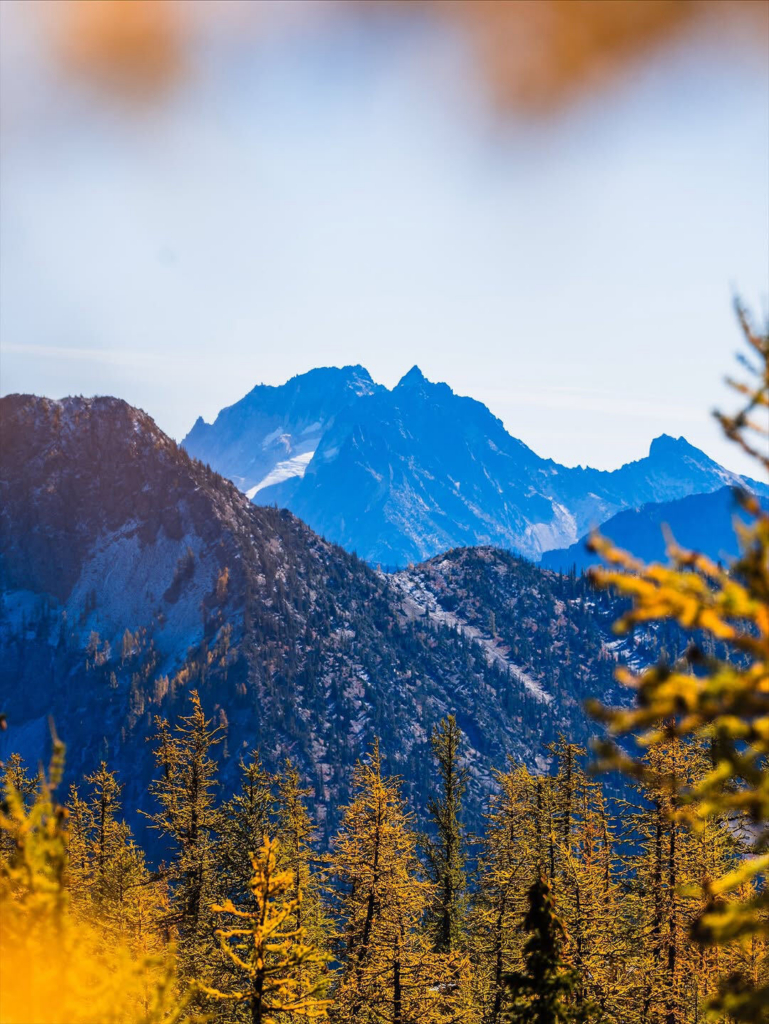
There’s something pretty satisfying about knowing what you’re looking at when you hike through the North Cascades. So this fall, if you see a hillside glowing gold while the surrounding evergreens stay green, take a closer look. You may have found a larch.
And if you’re lucky enough to catch them at peak color, stop for a minute. Take a photo, but also take a look around. For a few short weeks, the North Cascades put on a pretty incredible show, green trees everywhere, with patches of gold lighting up the mountains. It’s worth planning a hike around.
Happy larch season!
Top photo by Wei Ling