


Why North Cascades Rivers Glow Turquoise Every Summer (And Why Diablo Lake Is So Iconic)
If you’ve ever driven through Washington’s North Cascades on a sunny summer day, chances are you’ve had the same thought as just about everyone else:
“Is the water really that color?”
The rivers shimmer in brilliant shades of turquoise, and Diablo Lake glows with an almost unreal blue-green color. Against a backdrop of evergreen forests, rugged peaks, and lingering snowfields, it looks more like something from a painting than real life. As a former North Cascades National Park ranger, I spent plenty of summer days roving the Diablo Lake overlook. Visitors would stop to admire the view, then almost inevitably ask, “Why is the water that color?” I heard every explanation imaginable, from algae and pollution to food coloring and even aliens.
The surprising part? The color isn’t enhanced by a camera filter or caused by chemicals in the water. It’s a completely natural phenomenon and the science behind it is just as fascinating as the view.
The Secret: Glacial Flour
Despite its name, glacial flour has nothing to do with baking.
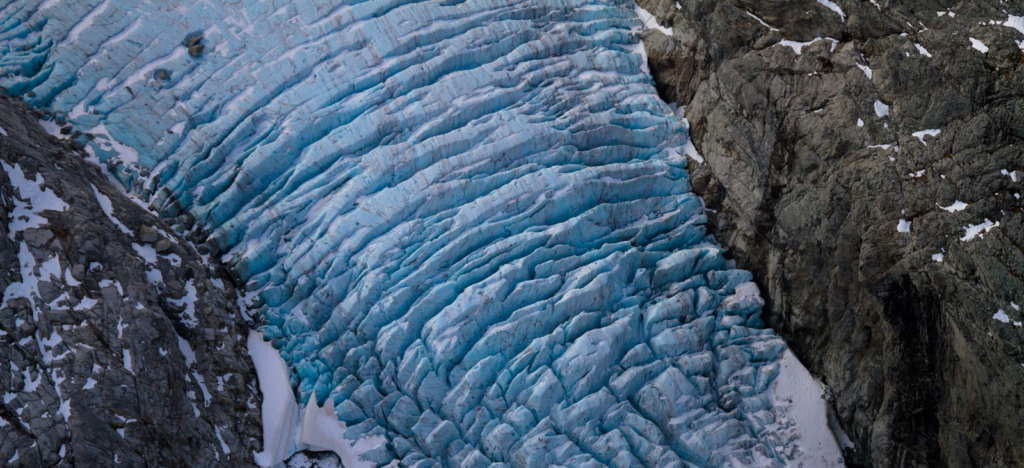
Picture a glacier as a giant sheet of sandpaper slowly creeping down a mountainside. As it inches along, the immense weight of the ice grinds against the bedrock beneath it, crushing solid rock into incredibly tiny particles, so small that many are finer than ordinary sand or even silt. These microscopic fragments are known as glacial flour, or rock flour.
When warm weather arrives each summer, snow and glacier ice begin to melt. The meltwater carries millions of these microscopic rock particles into nearby streams, rivers, and lakes. Because they’re so fine, they stay suspended in the water instead of quickly sinking to the bottom.
Those tiny particles are what give North Cascades rivers and lakes their famous turquoise color.
Why the Water Looks So Blue-Green
Here’s where the science gets really interesting. Sunlight contains every color of the rainbow. When it shines into water filled with glacial flour, the suspended rock particles scatter blue and green wavelengths more effectively than reds and yellows. The result is the stunning turquoise color that makes North Cascades rivers and lakes so memorable.
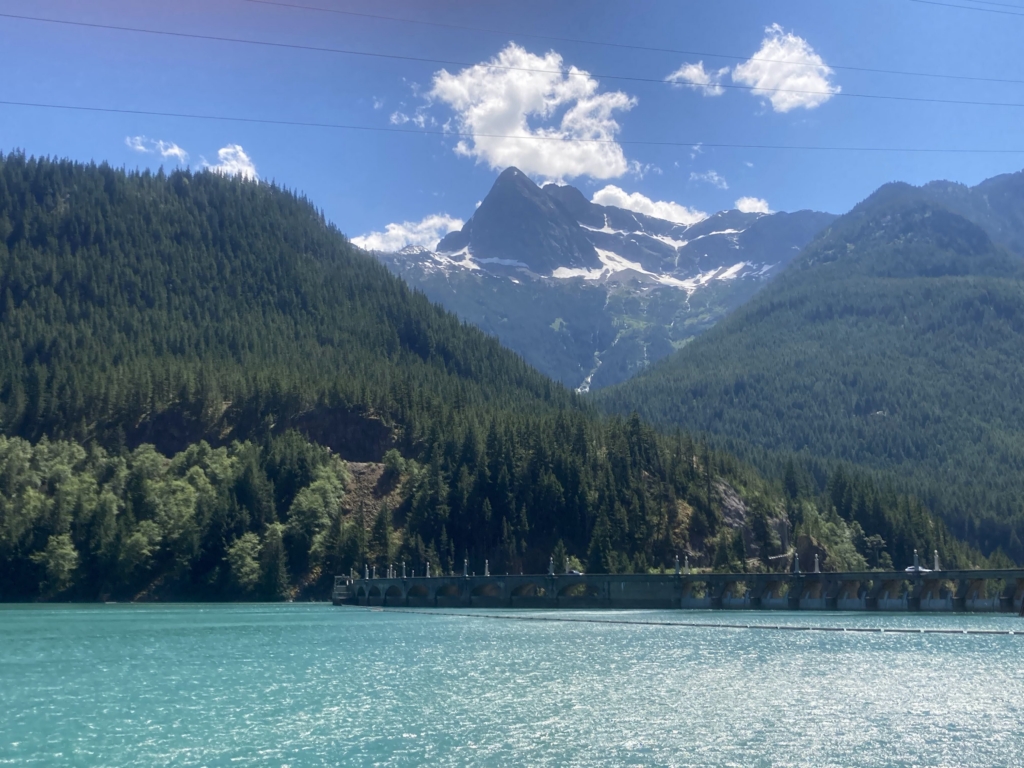
It’s actually similar to why the sky appears blue. In the atmosphere, tiny air molecules scatter blue light. In glacier-fed rivers and lakes, microscopic rock particles are doing much the same thing beneath the water’s surface.
On bright, sunny days, the effect becomes even more dramatic, making the water seem to glow.
Summer Is When the Colors Are at Their Best
Summer is when the colors really come alive. As temperatures rise, glaciers melt faster, sending more glacial flour into rivers and lakes. The extra suspended rock particles make those turquoise and emerald colors even more vibrant.
By late summer, many rivers and lakes are at their most colorful. As cooler weather returns in the fall and glacier melt slows, less glacial flour enters the waterways and the brilliant colors gradually begin to fade.
It’s one of the North Cascades’ most beautiful seasonal changes.
Why Diablo Lake Is So Famous
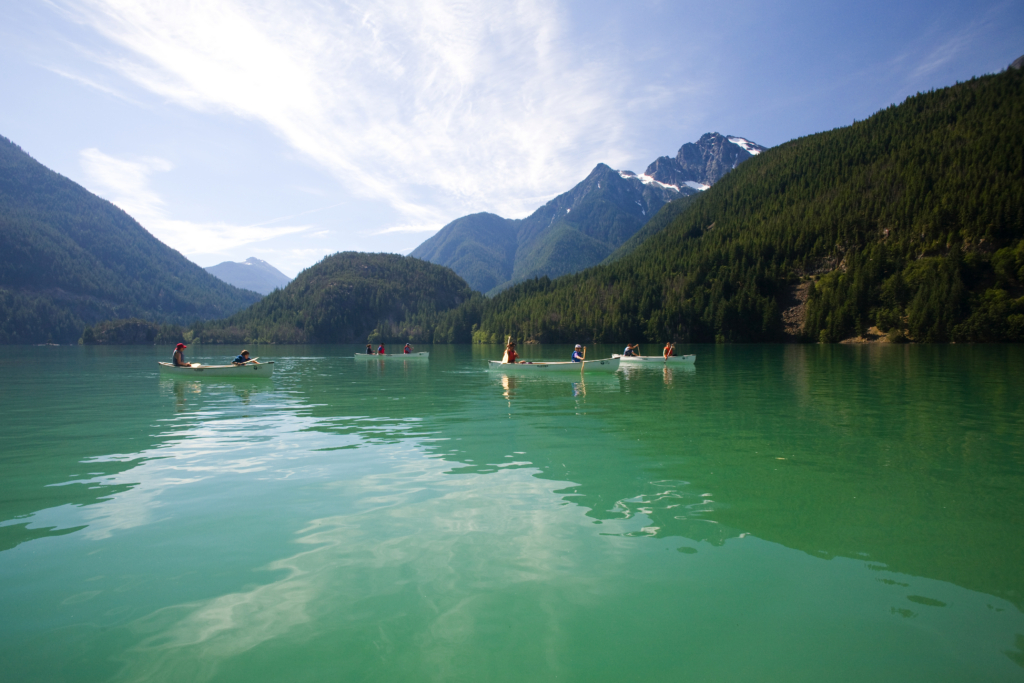
No place showcases this natural phenomenon better than Diablo Lake.
Fed by glacier melt from the surrounding mountains, the lake receives a steady supply of glacial flour throughout the summer. Unlike rushing rivers, the calmer water allows those tiny particles to remain evenly suspended, creating the lake’s smooth, luminous blue-green color.
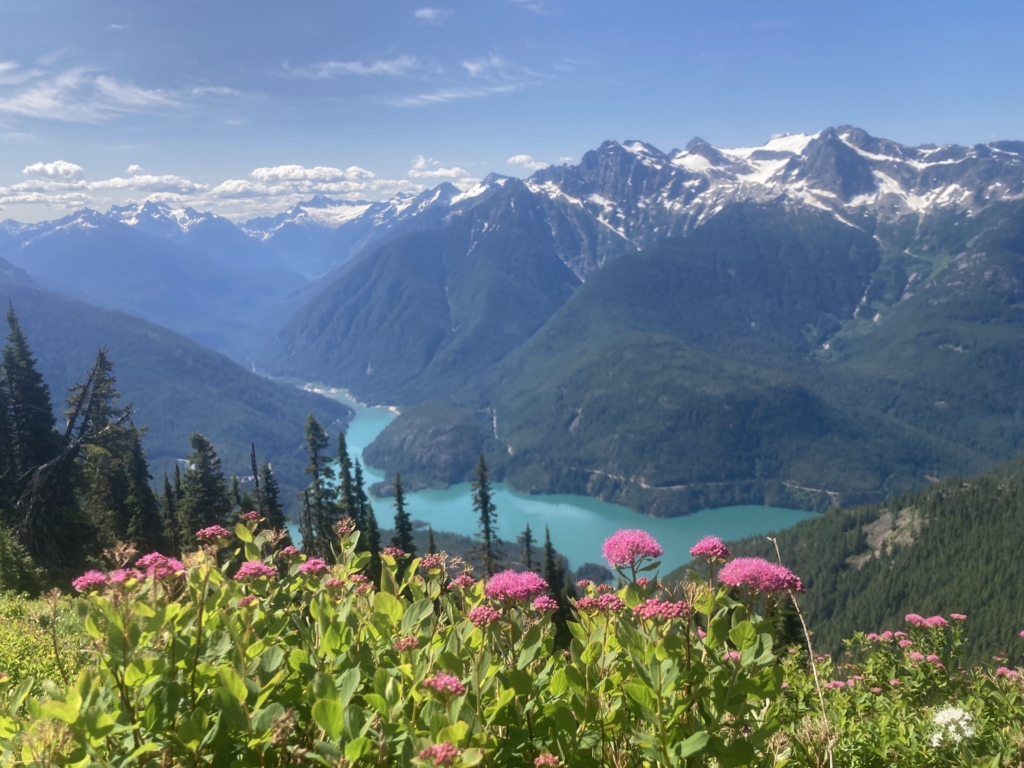
Surrounded by steep mountain slopes, evergreen forests, and dramatic peaks, it’s easy to see why Diablo Lake has become one of Washington’s most photographed places. The famous overlook along the North Cascades Highway gives visitors an unforgettable panoramic view, and on a clear summer day, the water almost doesn’t look real.
Photos are beautiful, but seeing the lake in person is something else entirely. If you’re feeling brave, stop by the Environmental Learning Center just off Highway 20 and take a dip in the glacier-fed waters of Diablo Lake. Just don’t expect it to be warm!
A Landscape That’s Still Changing
One of the coolest things about the North Cascades is this isn’t ancient history, it’s happening right now.

Glaciers may look frozen in place, but they’re always moving, slowly shaping the mountains one tiny grain of rock at a time. Every summer, they grind mountain rock into fine sediment, meltwater carries those particles downstream, and sunlight transforms the rivers and lakes into brilliant shades of turquoise.
It’s a reminder that these mountains are still changing. Every summer, they’re quietly reshaping the landscape one tiny grain of rock at a time.
So the next time you stop at Diablo Lake or watch a glacier-fed river winding through the North Cascades, you’ll know the secret behind that unforgettable color. You’re looking at millions of microscopic pieces of mountain rock, carried downstream by glacier melt and lit up by the summer sun. Even after spending so many summers in the North Cascades, I never got tired of seeing that color. Knowing the science behind it only made me appreciate it more.
But if you’d rather tell your friends it’s food coloring, I won’t ruin the story.
photos by Marissa Bluestein unless otherwise noted