


The Secret Skyway: Spring Bird Migration in the North Cascades
Every spring, the skies above the North Cascades come alive with one of nature’s greatest hidden spectacles: bird migration. While hikers and wildflower lovers explore the trails below, millions of birds are traveling overhead, often under the cover of darkness, on an epic journey north.
A Bird Highway Through the Mountains
The North Cascades sit along the Pacific Flyway, a major migratory route that connects South America to the Arctic. As temperatures rise, birds begin moving north from wintering grounds in places like Mexico and Central America, heading toward breeding areas in the Pacific Northwest, Canada, and Alaska.
Because of the rugged terrain, the Cascades act as both a barrier and a guide. Valleys funnel birds through lower passes, while some species soar over ridgelines using favorable winds. Timing varies by species, but early migrants like waterfowl and raptors may appear as early as March, while songbirds arrive in waves through April and May with peak movement mid April-mid May.

Meet the Migrators
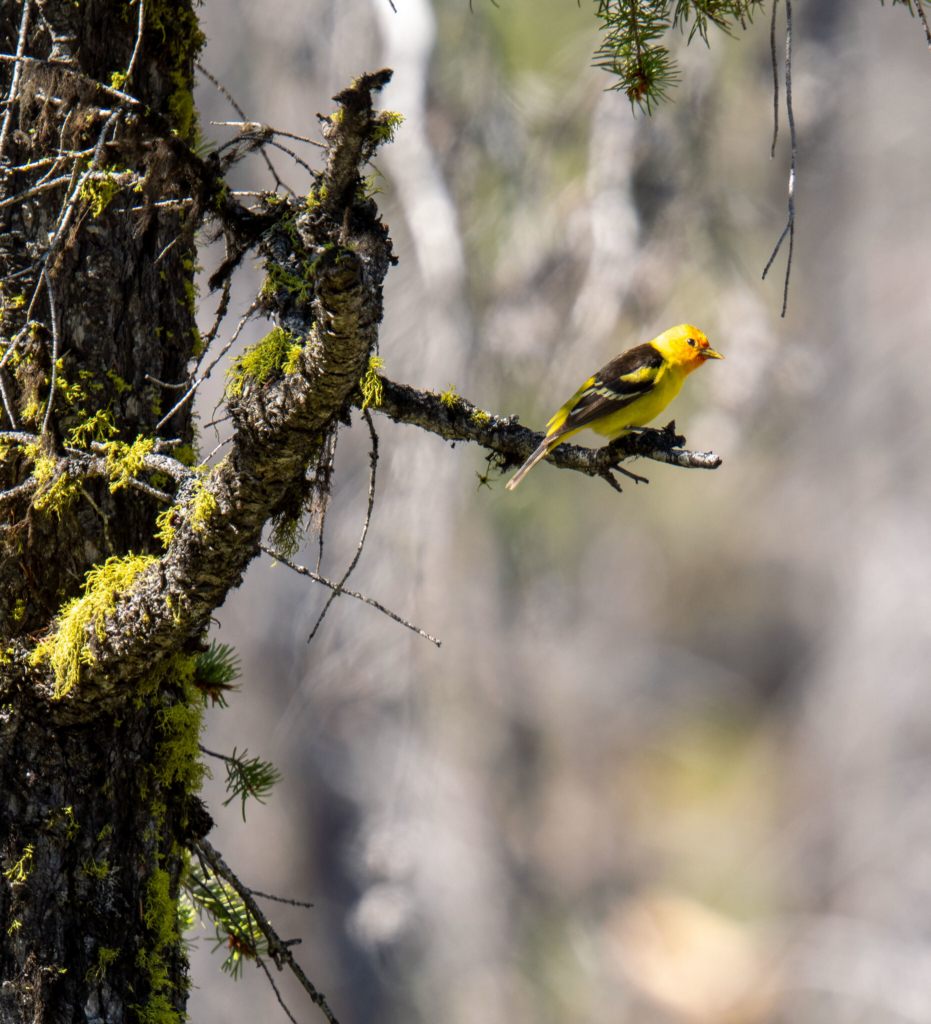
A huge variety of birds pass through the North Cascades each spring. Some are just stopping to rest, while others stay to breed. You can see and hear many of these spring migrators at our Environmental Learning Center along the many trails and on the shores of Diablo Lake.
If visiting the Environmental Learning Center is on your list make sure you take a walk to Diablo Dam and look for the fast aerial acrobatics of violet-green swallows near the dam. Take a walk along Deer Creek where you might be able to see brightly colored warblers like the yellow-rumped warbler. Move farther into the forest and you may hear a variety of thrushes like the Swainson’s thrush known for its ethereal flute-like song or a Varied thrush song that reminds us of a referee’s whistle and thus we nicknamed the referee of the forest.
Continue exploring scenic Highway 20 and as you drive you may be able to see hawks and osprey riding the thermal currents along both Diablo and Ross lakes. Each species times its journey to match food availability. Insects, budding plants, and open water all play a role in when birds arrive.
The Night Shift: Migration After Dark
Most songbirds migrate at night. Flying in cooler, calmer air helps them conserve energy and avoid predators. While we sleep, millions of birds take to the sky to continue their long arduous journey.
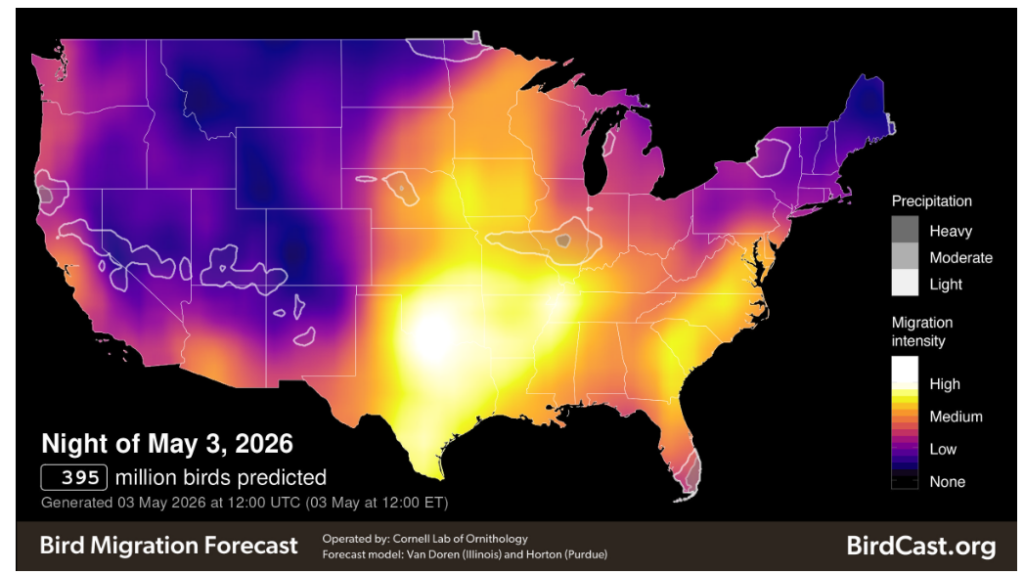
A great tool and scientific project using weather radar to track bird migration in real time is BirdCast. By analyzing radar data, BirdCast can estimate how many birds are in the air, how fast they’re traveling, and where they’re headed.
According to BirdCast, during peak migration nights in the western US millions of birds can pass over a single region. Their migration forecast maps can label nights as “low,” “medium,” or “high” intensity, giving birders a heads-up for when to expect a surge in activity.
It’s a reminder that even when the sky looks empty, it’s anything but.
Why Migration Matters
Migration isn’t just an impressive journey, it’s essential to ecosystems. Migratory birds help control insect populations, pollinate plants, and spread seeds across vast distances. Their movements link ecosystems across continents.
But migration is also dangerous. Birds face storms, habitat loss, and collisions with buildings along the way. That’s where people can make a real difference.

How You Can Help Migrating Birds
Even small actions can have a big impact on birds passing through your area:
- Turn off lights at night: Artificial light disorients migrating birds, especially during cloudy conditions. Dimming or turning off non-essential lights during peak migration helps prevent collisions.
- Make windows bird-safe: Use decals or patterns to reduce reflections that birds might mistake for open sky.
- Keep cats indoors: Outdoor cats are a major threat to resting and feeding birds.
- Plant native species: Native plants provide food and shelter for migrating birds needing a refueling stop.
- Check BirdCast forecasts: If a “high migration” night is predicted, it’s a perfect time to reduce lighting and be extra mindful.
A Hidden Wonder Overhead
Spring migration through the North Cascades is a reminder that nature is always in motion, even when we don’t see it. So the next time you step outside on a spring evening, look up. Above the peaks and forests, thousands or even millions of birds may be passing silently overhead, each one on a journey that spans continents and every small action we take can help them along the way.
Photo credits: swans: Tim Leach; Birdcast radar: Cornell Lab Ornithology; all others: North Cascades Institute.