

From the Trail: Spring Hiking in the North Cascades
In Search of Waterfalls, Lush Forests, and Quiet Trails
Early spring in the North Cascades is a time of transition. Snow still covers the high peaks, but lower forests are already shifting into vibrant greens. Waterfalls grow stronger with snowmelt, rivers run high, and the trails feel quieter than in peak summer season. It’s a mix of winter and spring happening all at once, and that combination makes this a great time to explore.
Highway 20 Closure: What to Plan For
Before heading out, it’s important to know that State Route 20 (North Cascades Highway) is currently closed from Ross Dam Trailhead (near milepost 134) on the west side to Porcupine Creek (near milepost 156) on the east side, according to Washington State Department of Transportation (WSDOT). They are currently estimating a full reopening around June 25.
This means, right now, you cannot cross the park via Highway 20 right now, and eastern destinations like Rainy Pass and Washington Pass are not accessible from the west. As a result, early spring hiking is focused on the western side of the North Cascades National Park Service Complex.
The good news is that this area still offers a wide variety of trails, from accessible forest walks to scenic viewpoints near Diablo Lake.

North Cascades Institute Environmental Learning Center
One of the best places to start is the North Cascades Environmental Learning Center, located on the shore of Diablo Lake. Surrounded by steep forested slopes and glacier-fed water, it’s both a learning space and a peaceful base for exploring the surrounding area.
In early spring, the setting feels especially fresh. Mosses are bright, streams are full, and bird activity increases throughout the forest. Several trails around the campus provide easy access to the landscape, and some are ADA-accessible, making it possible for more visitors to experience the lake and forest environment comfortably.
If you’re looking for a quiet forest walk, the Deer Creek Loop is a good option. Listen for spring bird song as you go. If you want a bit more effort, continue uphill and you’ll reach a small early-season waterfall. For something longer, the Diablo Lake Trail runs from the parking area along the shoreline and eventually reaches Ross Dam.
After your hike, rest your legs on the beaches of the glacier fed Diablo Lake and take in the views of Pyramid and Colonial peaks.

ADA-Friendly Trails in the Area
Even in a rugged mountain landscape like the North Cascades, there are several accessible trails that work well in early spring.
In Newhalem, the River Loop Trail offers another accessible option. This easy path follows the Skagit River through old-growth forest. During spring, the river is especially powerful as snowmelt increases water flow, creating a dramatic but accessible riverside experience.
The Sterling Munro Boardwalk, located behind the Newhalem Visitor Center, is fully ADA-accessible and winds through shady Douglas fir and huckleberry before opening to a sweeping view of the Picket Range.
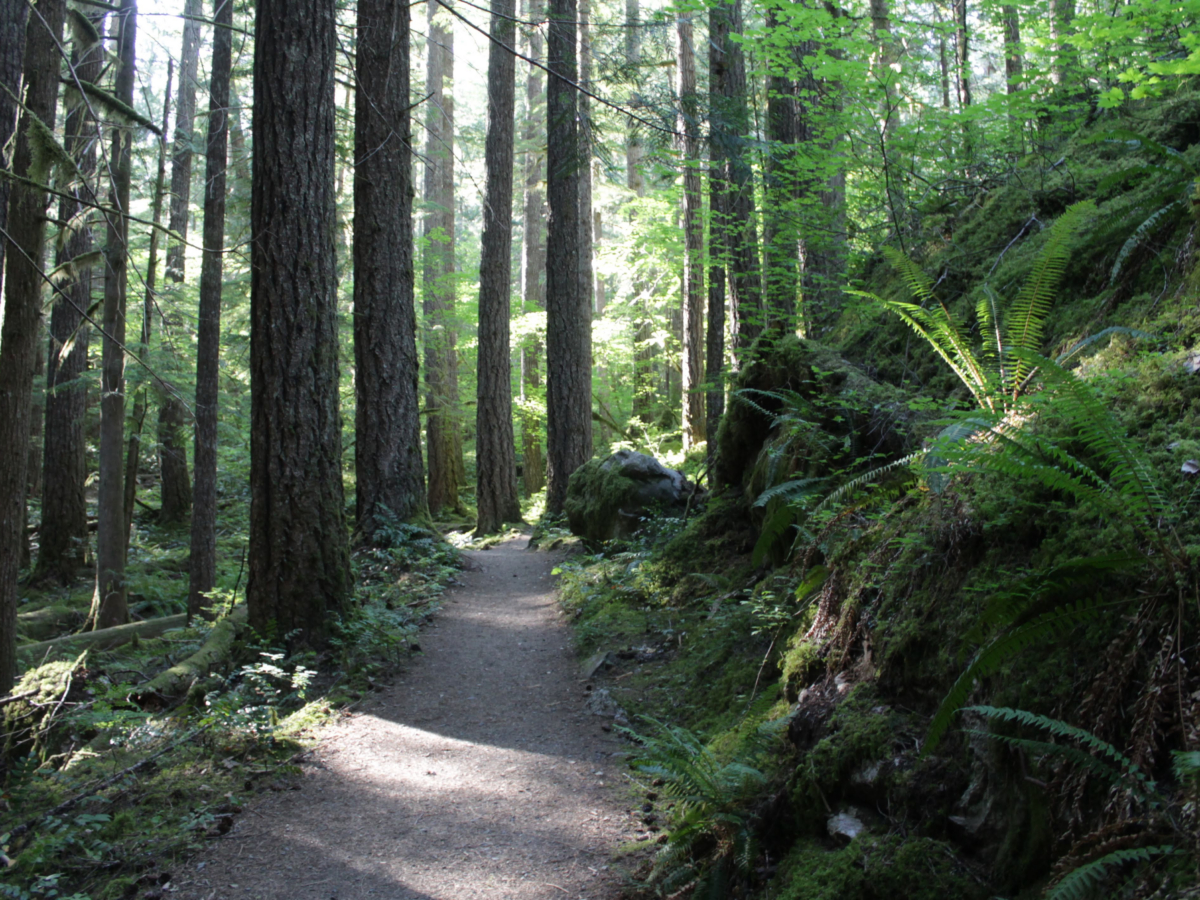
The Trail of the Cedars is another gentle walk, featuring large cedar and Douglas fir trees covered in moss and lichens. The forest here feels quiet and shaded, with soft ground that contains a history of logging, damming and fire.
The Happy Creek Forest Walk is a short ADA-accessible boardwalk trail near the Environmental Learning Center area (near Ross Dam trail head, make sure to check road closures). It passes through dense, mossy old-growth forest with interpretive signs that highlight the surrounding ecology. The creek nearby adds a steady natural soundtrack, especially during spring runoff.

Thunder Creek: A Classic Spring Hike
Thunder Creek is one of the standout hiking areas on the western side of the park complex. The lower Thunder Creek Trail is often accessible earlier in the season and offers a straightforward route into a broad glacial valley.
In spring, Thunder Creek is at its peak flow, fueled by melting snow from surrounding mountains. The sound of rushing water stays with you for much of the hike, and the surrounding old growth forest feels especially lush during this time of year. Many hikers turn around at the Thunder Creek bridge, but the trail continues much farther for those who want a longer outing.

Thunder Arm and Thunder Knob Views
The Thunder Arm area near Diablo Lake is another strong choice for early spring hiking. While higher elevation routes may still be snow-covered, lower trails offer clear access to forest and lake views.
The Thunder Knob Trail is the highlight here. It climbs gradually through forest before opening to views of Diablo Lake’s bright blue-green water, framed by steep, snow-dusted peaks. In early spring, cloud cover often moves through the mountains, adding that classic Pacific Northwest moodiness to the views throughout the hike.
Why Early Spring Is Worth It
Early spring is one of the most interesting times to visit the North Cascades. Snow is still present at higher elevations, while lower elevations are quickly greening up. Waterfalls are strong, wildlife is more active, and the trails are generally quieter.
Conditions can change quickly, so hikers should be prepared for mud, lingering snow, and cool, wet weather. Waterproof gear and layered clothing make a big difference this time of year.
Even with the Highway 20 closure between Colonial Creek Campground (near milepost 130) and Porcupine Creek (near milepost 156), the western North Cascades still offer plenty of rewarding early spring hikes. From ADA-accessible forest walks to riverside trails and lake viewpoints, it’s a season that highlights the park’s quieter, more subtle beauty.